The LinkedIn About section formula (with a full before-and-after)
Be honest. When did you last touch your LinkedIn About section?
For a lot of people, the answer is "when I set up my profile". Some leave it blank. Others wrote three paragraphs of "results-driven professional with a passion for excellence" and never looked back.
Here's the thing. Your About section is the one spot on LinkedIn where you get to talk like a human. No job titles, no dates, no bullet points you have to squeeze into a template. Just you, explaining who you are and why someone should get in touch.
That's a big opportunity. Most people waste it.
What's the About section actually for?
When someone clicks on your profile, they've already seen your headline and decided you're worth a closer look. The About section is where they figure out if they want to talk to you.
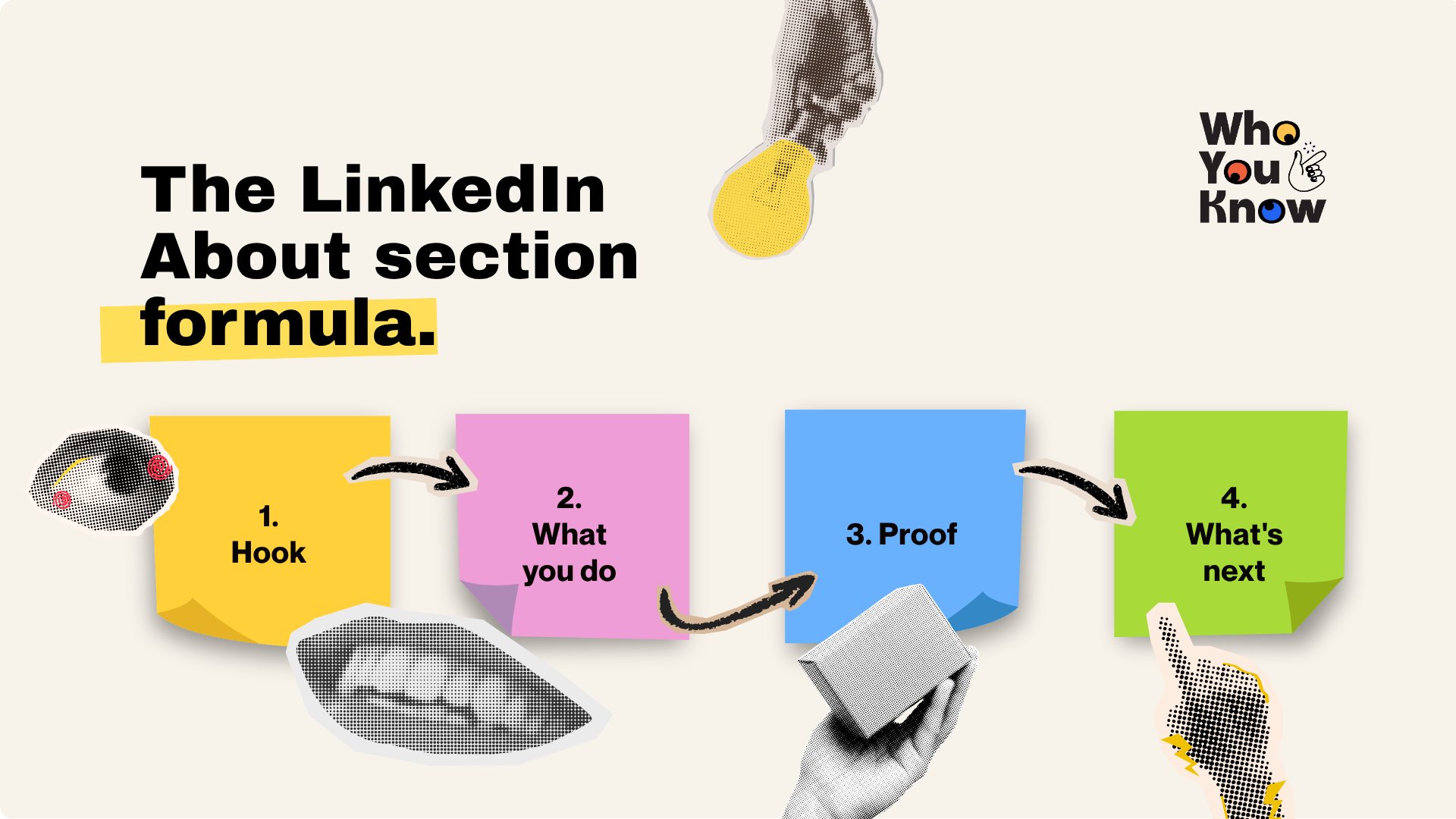
So it needs to do four jobs:
- Hook them so they click "see more".
- Explain what you do in plain words.
- Prove it with a couple of real examples.
- Tell them what's next and how to reach you.
That's the formula. Let's break it down.
The four-part formula
1. The hook (one or two lines) LinkedIn only shows the first few lines before cutting you off with "see more". So those lines have to earn the click. Open with what you do and who for, a strong opinion about your field, or the problem you love solving. Don't open with "I am a…" and your job title. They've already read that in your headline.
2. What you do (a short paragraph) In plain, first-person language. What kind of work, for what kind of teams or customers, and what you're known for. Write it like you're explaining it to a friend at a barbecue, not a panel.
3. Proof (two or three specifics) This is where most About sections fall flat. Don't just say you're great at stakeholder management. Show it. A project you led, a result you're proud of, a well-known client or a skill you've gone deep on. Short bullets work nicely here.
4. What you're looking for, and how to reach you (one or two lines) Tell people what you'd love to chat about. The kind of role, projects or industries you're interested in. Then make it easy: "Message me here" or your email. People can't reach out about an opportunity if they don't know you want it.
Four About section mistakes we see all the time
1. Leaving it blank. An empty About section is a missed chance to explain yourself in your own words.
2. The buzzword essay. "Dynamic, results-oriented leader passionate about driving synergies." Every word could apply to anyone. Nobody remembers it.
3. Third person. "Sarah is an experienced marketer who…" It's your profile. Write it as you.
4. Your CV, again. Your experience section already lists your jobs. The About section should connect the dots, not repeat them.
A full before and after
Here's an illustrative example. Priya is a fictional marketer with five years' experience who wants to move from retail into B2B tech.
Before
Results-driven marketing professional with 5+ years of experience in the retail industry. Passionate about brand, digital and strategy. Strong communicator and team player with excellent stakeholder management skills. Currently Marketing Manager at Retail Co. Always looking for new challenges and opportunities to grow.
Nothing wrong, exactly. But it could be anyone. No proof, no personality, no reason to message her.
After
I help brands turn "we should really do something about email" into campaigns that people actually open.
For the last five years I've run digital marketing for retail brands, mostly email, paid social and content. I like the bit where data meets storytelling: working out what customers really respond to, then writing the thing that makes them click.
A few things I'm proud of:
• Rebuilt our email program from scratch, including new segments, new templates and a weekly send people looked forward to
• Launched our first loyalty campaign, which became one of our best-performing channels that year
• Built a small in-house content team and trained them on SEO basics
Next, I'm keen to bring that same approach to a B2B SaaS or fintech team, ideally in lifecycle or growth marketing.
If that's you, or you just want to swap notes on email, send me a message here. Always happy to chat.
See what happened? The hook is specific and a little bit fun. The middle says what she does in plain words. The proof is concrete. And the close tells readers exactly what she's after and how to reach her. Not a single "results-driven" in sight.
(This example is fictional and illustrative. When you write yours, only include results that are true and that you're happy to talk about. Someone will ask.)
Write yours in twenty minutes
- Write your hook first. Five versions, pick the one you'd click on.
- Explain what you do in three or four sentences, out loud first if that helps.
- List your three best proof points. Results, projects, clients, skills.
- Say what you want next. Role type, industry, the kind of chat you're open to.
- Add how to reach you. Then read the whole thing back as a stranger.
Keep it tight. Most great About sections sit well under LinkedIn's character limit. Short and specific beats long and vague every time.
Bonus: your About section is your intro
When you reach out to someone at a company you'd love to join, the first thing they'll often do is click your profile. A clear About section answers "who is this and what do they want?" before you've had to explain it.
That's why we rewrite your About section in Who You Know Concierge, together with your headline, CV and headshot, before we line up calls with insiders at the companies you're targeting. Want a hand with yours? Check out Concierge.
Keep reading
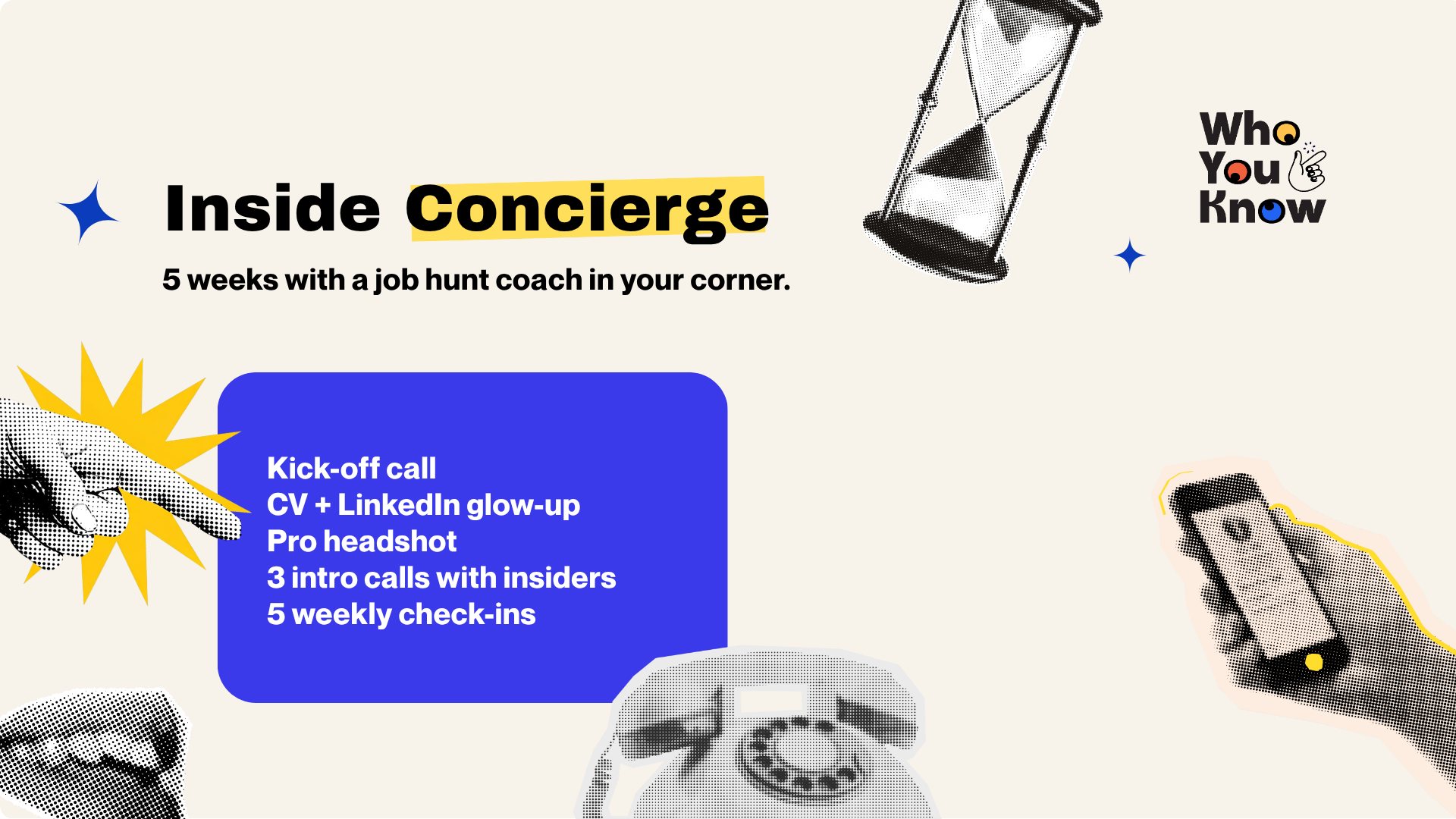
Inside Concierge: what 5 weeks with a job hunt coach looks like
Over the last ten days on this blog, we've talked about fixing your LinkedIn headline, running your job search like a five-week project, and translating your…
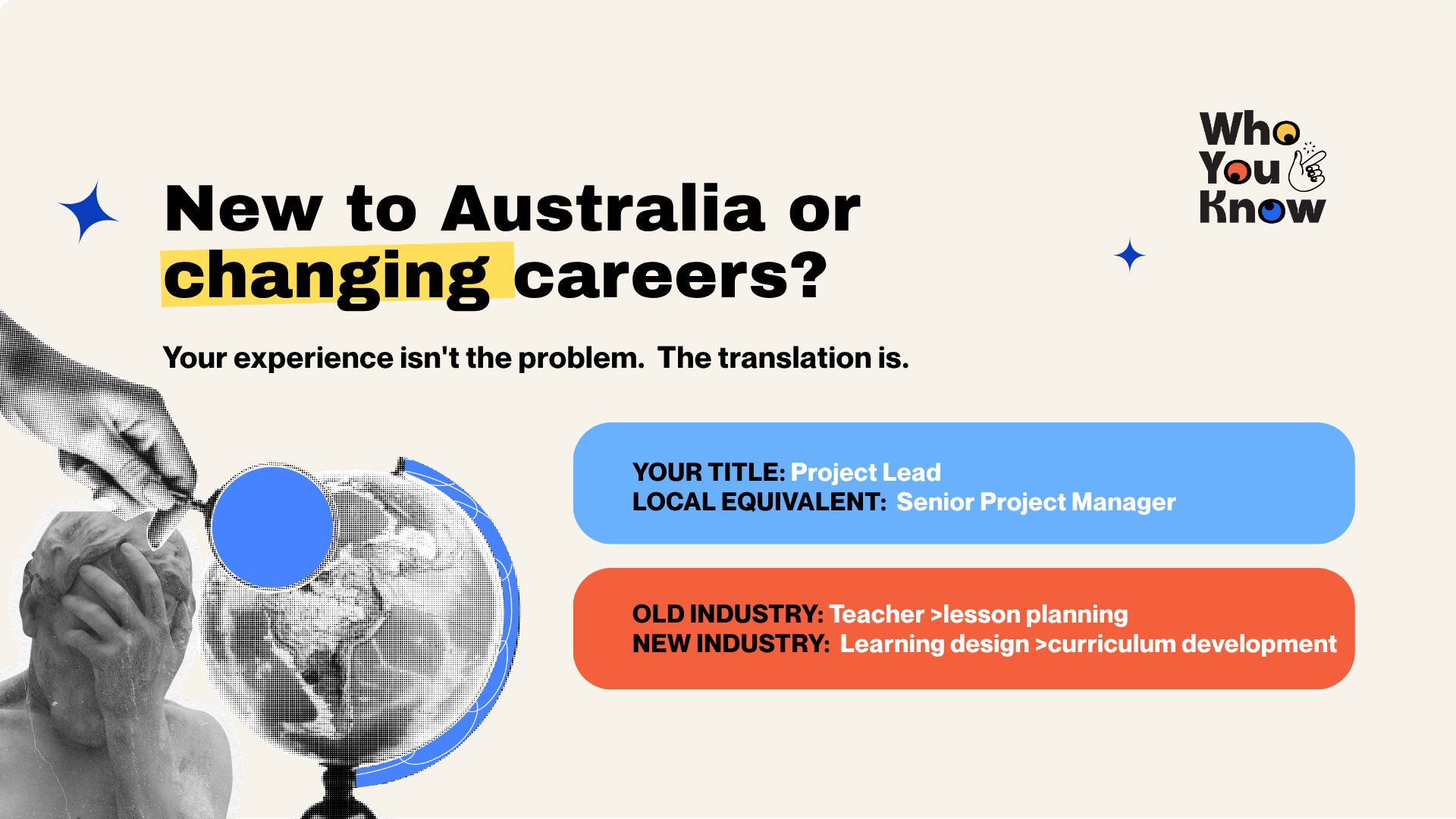
New to Australia or changing careers? How to make your experience make sense to local hiring teams
You've got years of solid experience. You've led teams, shipped projects, hit targets. And yet the applications go out and not much comes back.