Your LinkedIn headline is doing the wrong job
Quick test. Open LinkedIn and look at your headline, the line right under your name.
Does it say something like this?
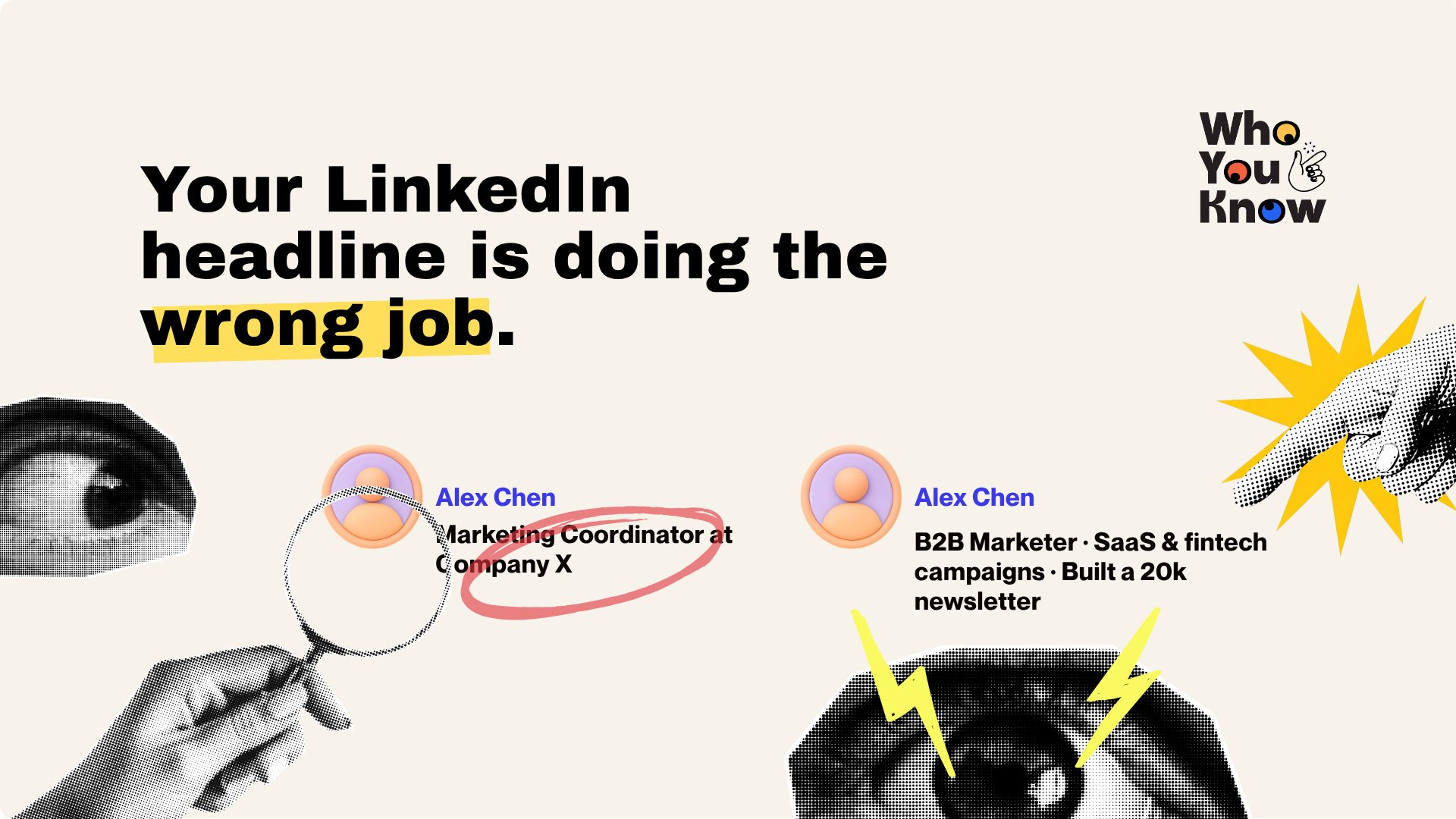
Marketing Coordinator at Company X
Thought so. Most do. And look, it's not wrong. It's just doing the wrong job.
Your headline follows you everywhere. It's under your name in search results, next to every comment you leave, and at the top of every message you send. For most people, it's the only bit of your profile anyone actually reads.
A job title tells people what you are. A good headline tells the right person why they should care. Big difference.
So what's a headline actually for?
When a hiring manager, a recruiter, or someone at the company you'd love to join sees your name, they make a split-second call: click, or keep scrolling.
Your headline is what tips it. So it needs to answer three things, fast:
- What do you do? In words they'd use, not your company's internal job title.
- What are you good at? The one or two things you'd love to be hired for.
- Why you? A result, a specialism, something that makes you stand out.
You don't need all three every time. But if yours only answers the first one, you're leaving most of the space empty. LinkedIn gives you up to 220 characters. Use them!
The four headline mistakes we see all the time
1. Just the job title. "Software Engineer at Acme." Accurate? Sure. Also identical to thousands of other profiles. Nothing here says "click me".
2. The buzzword pile-up. "Passionate | Driven | Innovative | Strategic Thinker." These words describe everyone, so they end up describing no one. And nobody has ever searched LinkedIn for "passionate".
3. The "please hire me" headline. "Seeking new opportunities." "Open to work." We get it, and there's no shame in it. But it tells people what you want, not what you offer. LinkedIn's Open to Work setting already does that job, so let your headline do a different one.
4. Insider jargon. "Associate, GTM Enablement (APAC Pod 3)." Makes total sense on your team. To a hiring manager anywhere else? Noise.
The formula
Here's a structure that works for most people:
[What you do] for [who or what] | [specialism or strength] | [proof]
Mix up the order, drop a part if it doesn't fit. The goal is simple: go from a label to a reason.
Before and after
Graduate data analyst
- Before: Data Analyst at Retail Co
- After: Data Analyst | Turning messy retail data into weekly decisions | SQL, Python, Power BI
Marketer switching industries
- Before: Marketing Coordinator at Company X
- After: B2B Marketer | Campaigns and content for SaaS and fintech | Built a 20,000-subscriber newsletter from scratch
Senior engineer
- Before: Senior Software Engineer at Acme
- After: Senior Backend Engineer | Payments and high-scale APIs | Go, Kubernetes | Led platform migration for 2M users
Between roles
- Before: Open to work
- After: Product Designer | Health and wellbeing apps | Research-led UX that ships | Ex-Company Y
New to Australia
- Before: Civil Engineer seeking opportunities in Sydney
- After: Civil Engineer | Transport and infrastructure projects | 8 years delivering road and rail | Now based in Sydney
See what happened? Every "after" uses words a recruiter would actually type into a search (backend engineer, B2B marketer, product designer), says what kind of work it is, and throws in one piece of proof. Not a single "passionate" in sight.
(One golden rule: only use numbers that are true and that you're happy to talk about. Your headline is a claim, and someone will ask.)
Fix yours in five minutes
- Write down the job you want next, not the one you've got. That's your opening phrase.
- Pick the two things you most want to be hired for. Steal the wording from real job ads for that role. Those are the words people search.
- Find your one piece of proof. A result, a well-known employer, a qualification, a niche.
- Plug it into the formula and cut anything a stranger wouldn't get.
- Read it like you're the hiring manager. Would you click? No? Sharpen the proof.
Then update it. It takes ten seconds, and you can keep tweaking it as you go.
Bonus: your headline does the intro for you
Here's the bit people forget. When you message someone at a company you want to join, your headline shows up with you. A clear one has done half the introducing before you've even said hi. A vague one makes your message work twice as hard.
That's why the headline is the very first thing we rewrite in Who You Know Concierge, along with your About section, CV and headshot, before we line up calls with insiders at the companies you're targeting. Want a hand with the whole profile? Check out Concierge.
Keep reading
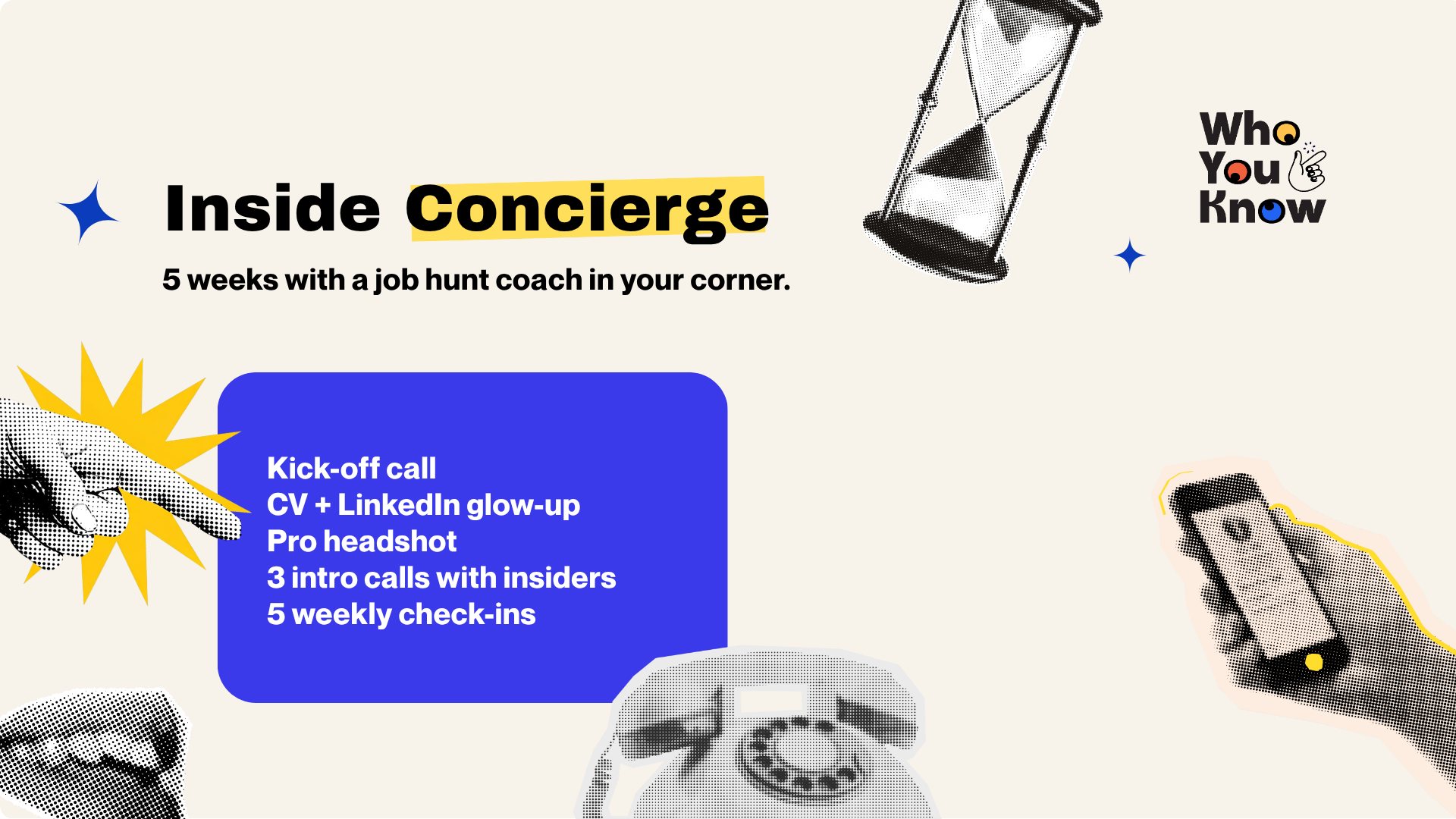
Inside Concierge: what 5 weeks with a job hunt coach looks like
Over the last ten days on this blog, we've talked about fixing your LinkedIn headline, running your job search like a five-week project, and translating your…
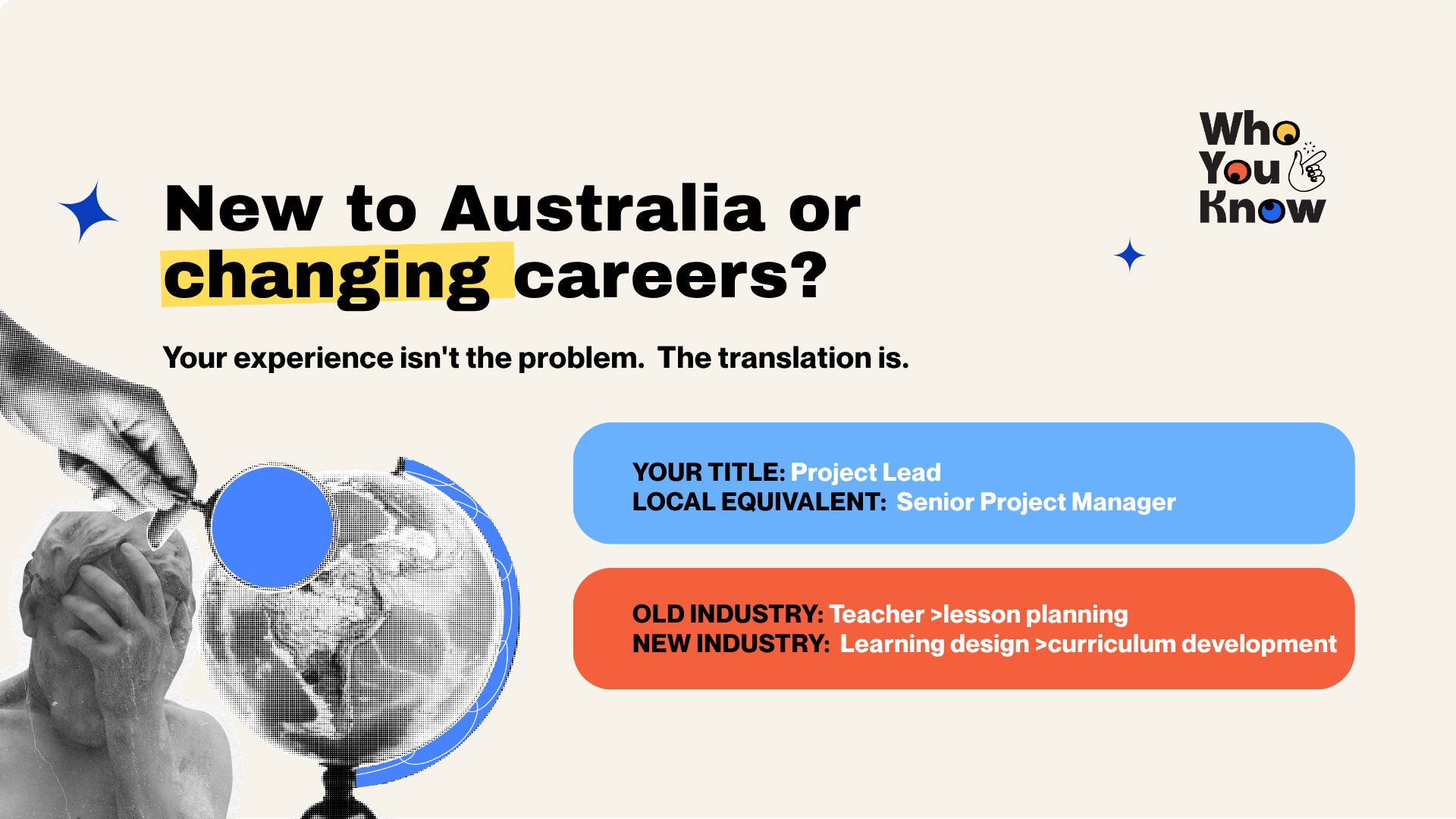
New to Australia or changing careers? How to make your experience make sense to local hiring teams
You've got years of solid experience. You've led teams, shipped projects, hit targets. And yet the applications go out and not much comes back.